
Topmatch Rules Analysed: What the Terms Mean for Ukrainian Players — October 2026
The sections below examine the Topmatch terms of use one provision at a time. Rather than simply restating each clause, the analysis looks at the reasoning behind it: why an account must be opened in the holder's own name, under which conditions a wager becomes binding, what a breach typically costs and through which channels a disagreement is resolved. The terms and conditions Topmatch publishes are short and plainly worded, so the commentary focuses on purpose and consequence rather than on translating legal jargon.
Revision date: October 2026
Scope and Legal Footing of the Document
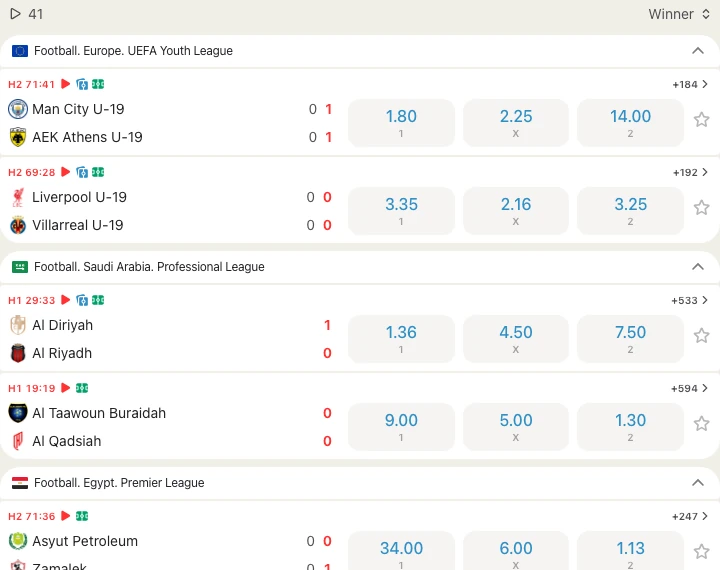
At their core, these Topmatch rules define a contractual relationship between two parties, the operator and the person holding an account. Their reach is deliberately broad: the same text governs the sportsbook, the casino lobby, the cashier and the personal dashboard. The reason is practical, since a single set of terms prevents contradictions between product areas and leaves no section in which a player could claim that different rules applied.
Completing registration is treated as acceptance of every provision, not of a selected subset. The logical corollary is that anyone who finds a particular clause unacceptable is expected to refrain from using the service altogether instead of attempting to negotiate individual terms.
A further point shapes everything that follows. The operator's licence was issued in Curacao, and no authorisation has been granted by the Ukrainian regulator. This is not a technical footnote: it decides which body hears complaints and which legal framework applies when a dispute arises.
| Key provision | What the terms state |
|---|---|
| Licence jurisdiction | Curacao |
| Minimum age | 21 for players from Ukraine |
| Number of accounts | One per user |
| Account currency | UAH and other available currencies |
| Document language | The version on the operator's site prevails |
Why the age rule matters: Ukrainian law sets the gambling threshold at 21. Compliance is confirmed during identity checks, and an account found to belong to someone younger is shut down, because the operator cannot lawfully continue the relationship.
Opening and Confirming an Account
Only the individual concerned may open a profile, and only in their own name. Creating an account for somebody else, or handing over login access once it exists, is prohibited. The rationale is accountability: if the person placing wagers differs from the person on record, neither age controls nor payment checks have any meaning.
During sign-up the applicant declares being at least 21 and supplies truthful personal details. Keeping those details up to date is the holder's own responsibility, which means outdated information cannot later be blamed on the platform.
How Identity Checks Work
Before any money leaves the account, verification has to be completed. The operator is also entitled to ask for documents at an earlier stage whenever there is a reason to check. In practice, the request may cover a legible identity document, proof of age and citizenship and, where the situation warrants it, evidence of where the funds came from together with confirmation that the payment instrument belongs to the player.
The data entered in the profile is compared with these documents. Should the two diverge, operations are put on hold until the mismatch is explained; this protects the operator from paying out to the wrong person and the player from having their identity misused.
The Single-Account Principle
No exceptions are made to the rule of one account per person. Duplicate profiles are detected by linking them to the same individual, device or payment instrument, and they are blocked once identified. The purpose is to stop the repeated claiming of welcome offers and the circumvention of limits.
What happens if a duplicate is found: any winnings generated on the second account are cancelled. Money the user actually deposited, however, is returned under the operator's own rules, so the sanction targets the gain rather than the player's capital.
Cashier Operations and Promotional Offers
All deposits and withdrawals are processed through the cashier inside the personal account. Third-party money is refused, because the payer must be the same person as the account holder. A related rule requires payouts to return via the same method that was used to fund the balance; this stems from financial monitoring obligations, which aim to make the flow of money traceable from start to finish.
Several conditions must be satisfied before a withdrawal request is accepted. Verification has to be finished in advance; a bonus that is still active and has not been fully wagered will hold the payout back; the per-transaction ceiling varies by payment method; and the receiving details must be in the holder's name.
Exact thresholds, processing times and the list of supported methods are kept in the "Cashier" section. Since these parameters are revised from time to time, a player is well advised to look them up immediately before each transaction rather than rely on memory.
How Bonus Conditions Interact With the Main Terms
Every promotion is governed by its own set of conditions, covering the wagering multiplier, the time allowed and the games that count towards turnover. Where these specific conditions differ from the general document, the specific ones prevail, which is the usual legal hierarchy between a special rule and a general one.
Consequence of a breach: by activating an offer, the player accepts its rules. If those rules are broken, for example by staking more than the permitted maximum while wagering is in progress, both the bonus and the winnings derived from it are cancelled.
How Wagers Are Accepted and Settled
A wager acquires legal force only at the moment the system confirms the slip. Until that confirmation arrives, nothing has been agreed, and the fact that a selection appears in the browser history does not alter this. Fixing the moment precisely removes ambiguity over which odds and limits applied.
Settlement relies on the official result of the event. The operator chooses the data source, and in most cases this is the information published by the organiser of the competition, which is regarded as the most authoritative reference.
Grounds for Voiding a Slip
The terms permit a slip to be cancelled when the wager has lost its purpose or was accepted on flawed conditions. The table summarises the typical scenarios and their outcomes.
| Scenario | Result for the slip |
|---|---|
| Technical failure on acceptance | Slip voided |
| Obvious pricing error | Recalculation at correct odds or cancellation |
| Event cancelled or postponed | Refund in accordance with operator rules |
| User breach of limits | Bet cancelled in full or in part |
| Signs of a fixed result | Settlement suspended pending clarification |
An "obvious error" is defined as a price plainly out of line with the real likelihood of the outcome. In such a case the slip is recalculated at the figure a correctly functioning system would have displayed, so neither side profits from a malfunction.
About limits: the operator caps both the stake amount and the maximum payout. These caps depend on the sport and on the status of the account, and the applicable values are always shown in the slip itself.
Conduct That Triggers Penalties
Certain behaviour violates the terms and leads to restrictions being placed on the account. The list below should not be read as complete: each case is judged on the overall combination of indicators, which gives the operator room to respond to new forms of abuse.
| Violation | Likely response |
|---|---|
| Use of another person's payment details | Transactions suspended, documents requested |
| Multiple accounts for one user | Profiles blocked, winnings voided |
| Provision of false information | Verification refused, account closed |
| Automated betting systems | Slips cancelled, access restricted |
| Attempts to circumvent limits | Transactions voided, account sanctions |
| Fixed event results | Settlement suspended, data passed to the organiser |
Measures are scaled to the seriousness of the violation. A contested technical incident does not by itself lead to closure, although operations may be frozen while the facts are established.
Underage use: play by anyone below 21 counts as a fundamental breach. In that situation the account is closed and any winnings are cancelled, since the relationship should never have existed in the first place.
Intellectual Property in the Platform
The code, interface, texts, graphics, logos and the very structure of the site belong either to the operator or to its partners. What the user receives is a narrow licence to view the material and to carry out operations within their own account; no ownership of the content passes to them.
From this follows a set of prohibited uses. Commercial copying of materials is not allowed, nor is automated harvesting of data from the pages, altering the program code or bypassing technical safeguards, and displaying logos or brand marks without consent.
The games themselves are produced by independent studios, which retain the rights to them; the operator merely makes the titles available under licence agreements.
Personal use is unaffected: the restrictions are not aimed at ordinary players. Taking a screenshot of one's betting history in order to send it to support, for instance, is not a violation.
Allocation of Responsibility
Responsibility is split according to who controls what. The operator is answerable for the platform working properly, whereas the user is answerable for safeguarding access to the account and for the gaming choices made.
Matters Beyond the Operator's Reach
Several factors lie outside the operator's sphere of influence, and the terms say so explicitly to avoid unrealistic expectations. These include connection problems on the user's or internet provider's side, faults in third-party devices or software, actions by outsiders who have obtained access to the account, delays caused by payment systems and, naturally, the financial result of play itself, whether a win or a loss.
Continuous availability is likewise not promised: scheduled maintenance and outside events can temporarily limit access to the service.
What the Account Holder Answers For
Keeping login credentials secret is the holder's duty. Any operation performed after the correct username and password were entered is presumed to have been carried out by the holder, which is why sharing credentials is so risky.
A note on risk: betting real money always involves the possibility of losing it. No system can guarantee an outcome, and gambling should not be regarded as a source of income. Players in Ukraine can call the "Gambling Problems" helpline on 0800 300 800.
Rights Retained by the Player
The document is not limited to duties; it also lists entitlements that the account holder keeps whatever the status of the profile. Their purpose is to balance the operator's broad discretionary powers.
- Transaction history. Wagers, deposits and payouts for the entire period remain available in the account
- Information on request. The holder may ask for details about the profile's status and the reasons for any restriction
- Personal limits. Caps on deposits, session time and stakes can be set by the player
- Self-exclusion. Can be activated at any moment with no explanation required
- Ending the relationship. The account may be closed simply because the holder wishes it
- Access to support. The available channels are listed in the contacts section
Rights relating to personal data are dealt with separately in the Privacy Policy, which also explains what information is gathered and for how long it is kept. Players concerned about their own habits may also consult the responsible gaming page.
Right to an explanation: even when operations are restricted, the player may still ask why. The operator discloses the reason for a block unless doing so would conflict with financial monitoring rules, which sometimes forbid tipping off the person concerned.
Termination and Restriction of Access
Either party may bring the account to an end. The applicable grounds and the procedure differ depending on which side takes the initiative, as the table illustrates.
| Initiated by | Reason | How it is done |
|---|---|---|
| User | Personal decision | Support request from the personal account |
| User | Self-exclusion | Profile settings, period chosen in advance |
| Operator | Breach of terms | Block with notice to the profile email |
| Operator | Regulatory requirement | Access restricted under the order |
Whatever balance remains is paid out once the checks are complete, with the single exception of sums obtained through a breach of the terms.
The Logic of Self-Exclusion
Self-exclusion exists to help a player regain control over their gambling. The length of the break is chosen beforehand and cannot be cut short. That rigidity is intentional: a tool that could be switched off in a moment of temptation would offer no protection at all.
Obligations survive closure: shutting the account does not erase commitments that arose earlier. Slips still open are settled under the standard rules, and unfinished verification can postpone the payout of the remaining balance.
Applicable Law and Handling of Disputes
The law that governs the relationship is that of the licensing jurisdiction, Curacao. Ukrainian gambling legislation does not apply, because the operator has not received authorisation from the local regulator.
In practical terms, a disagreement is reviewed according to the rules of the operator and of its licensing body, not within the Ukrainian legal system. A player should take this into account before depositing.
Steps for Raising a Complaint
The process follows a fixed sequence. First, the player writes to support and describes what happened, attaching supporting material such as screenshots, transaction numbers and the exact date and time. The operator then reviews the case. Only if the player disagrees with the outcome may the matter be escalated to the licensing authority.
Attempting resolution with the operator first is compulsory. A supervisory body will usually decline to consider a complaint if no effort was made to settle it directly, since it expects the operator to have had the opportunity to correct its own mistake.
Tax and guarantees: because there is no Ukrainian licence, payouts carry no state guarantee and the operator does not withhold tax. Responsibility for taxing winnings rests with the user, in line with the rules of the country where they live.
Amendments to the Terms
The operator reserves the right to revise this document. Typical triggers are changes in legislation, adjustments to how the platform operates and new demands from the licensing authority.
The version in force is always the one shown on this page. Its revision date appears at the top, allowing a player to see at a glance whether anything has changed since their last visit.
Carrying on using the service once a new version is published counts as agreement to it. A player who does not accept the changes can instead close the account following the procedure described above.
No retroactive effect: revisions never reach back to wagers that have already been settled. A slip accepted before the new wording took effect is handled under the rules valid at the moment it was accepted, which protects the player's legitimate expectations.
Getting in Touch With Support
Any question about the terms, about how the account works or about a disputed operation should be sent to support; the channels are listed in the contacts section.
Experience shows that a request moves faster when it contains the relevant details from the very first message. Ideally, it should state the account number or the email used for registration, the date and time of the incident along with the time zone, the identifier of the slip or transaction, and a concrete description of the problem rather than general phrases.
Routing of requests: matters relating to verification and payouts are dealt with by a dedicated team. Sending the same request through several channels simultaneously does not make it any quicker and may in fact create duplicate tickets.
Frequently Asked Questions About Top Match Terms
Is verification compulsory?
Yes, it must be completed before any withdrawal. The operator may also ask for documents sooner if it has a reason to carry out a check.
May a player hold two accounts?
No. The one-account rule has no exceptions; duplicate profiles are blocked and any winnings on them are cancelled.
Why do withdrawals go back through the deposit method?
Financial monitoring rules require it; it is not a restriction the platform invented for itself. Every licensed operator applies the same principle.
What happens when odds are obviously wrong?
The slip is either recalculated at the correct price or cancelled and the stake refunded. The ground for this is a clear gap between the quoted odds and the real probability of the outcome.
Are the terms ever applied retroactively?
No. A new version does not reach back in time, and slips accepted before it was published are settled under the earlier rules.
How does a player close the account?
By sending a request to support from the personal account. Once the checks are done the balance is paid out, except for money obtained in breach of the terms.
Is self-exclusion reversible before it ends?
No. The period is fixed in advance and cannot be reduced, because that is exactly what makes the tool an effective means of control.
Is Ukrainian law relevant?
No. The operator has no authorisation from the local regulator, so disputes fall under the licensing jurisdiction, Curacao.
Prepared by the editorial team: mebli.biz.ua editorial team
Published: · Updated:
Checked by hand: we went through sign-up, looked at the cashier, the betting line and bonus terms, and confirmed the brand's legal status as of the update date. Double-check the licence on the operator's site.